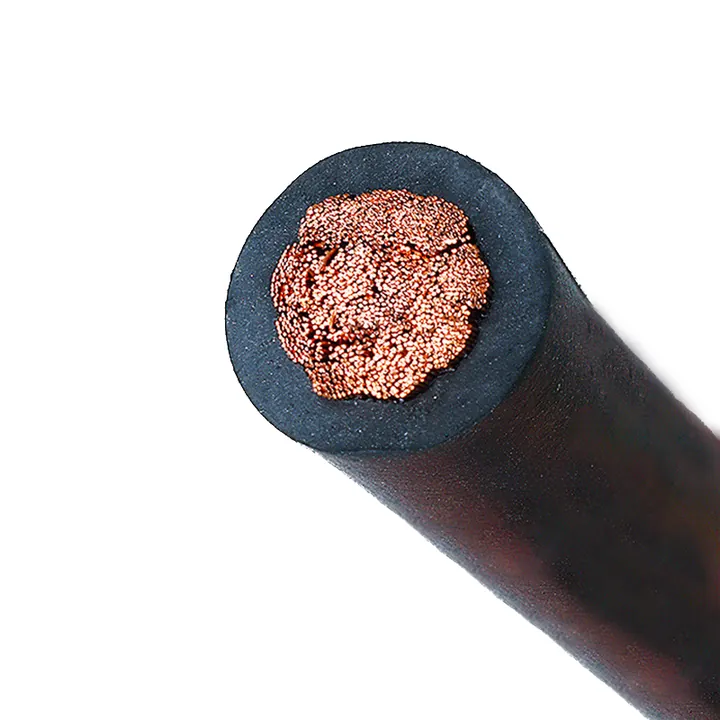
Marine Cable Manufacturer for Shipboard and Offshore Power, Control and Instrumentation Cables
Marine and offshore cable built for a sealed, salt-laden, fire-prone hull — tinned copper that resists the sea in EPR or XLPE insulation, under a halogen-free, low-smoke sheath that will not feed a fire or choke an escape, with a fire-resistant option that keeps the critical circuits live. Power, control and instrumentation types from 150/250 V to 0.6/1 kV, built to meet IEC 60092, IEEE 1580 and NEK 606 and the marine cable requirements of DNV, ABS and Lloyd’s Register.
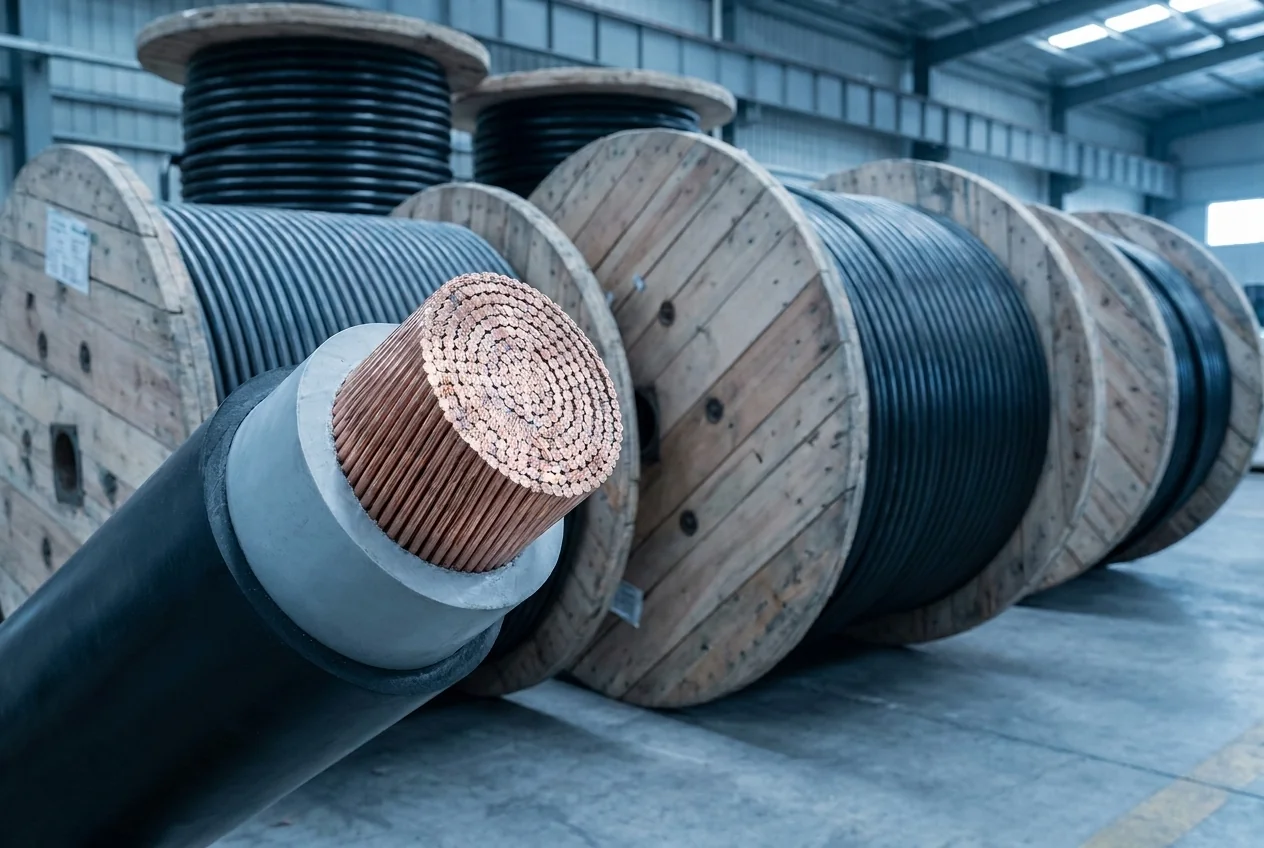 Marine & offshore cable · tinned copper · halogen-free low-smoke LSZH / HFFR / SHF2 sheath · power, control and instrumentation
Marine Cable Construction — Tinned Copper in a Halogen-Free, Low-Smoke, Fire-Safe Build
A ship is a sealed space, surrounded by water, with nowhere to walk away from a fire — so a cable for it has to answer three questions an onshore one never faces: what its sheath gives off if it burns, whether the sea air corrodes its terminations over the years, and whether it is built the way a vessel is surveyed against. Everything about how it is put together is an answer to one of those three — the full ratings sit in the table below.
-
A tinned-copper conductor
Every strand is tin-coated rather than left bare, so the salt air and humidity of a hull do not oxidise the copper or loosen a termination over a long service life. That is a marine concern first and foremost: an onshore power or building cable rarely tins its conductor, because it never has to live in salt spray.
-
A halogen-free, low-smoke sheath
The sheath is the difference between a fault and a disaster on a vessel. A halogen-free, low-smoke compound (LSZH / HFFR / SHF2) gives off no dense smoke to blind an escape route and no corrosive acid gas to attack people and equipment if it ever burns, and it is flame-retardant so it self-extinguishes instead of carrying the fire along the run. A rubber, PVC or charging cable ashore is judged on flexibility or oil resistance; here the sheath is judged first on how it behaves in a fire.
-
A fire-resistant option
For the circuits that must not go dark in an emergency — fire pumps, emergency lighting, alarms — a fire-resistant construction keeps the conductor’s circuit intact for a period once a fire has started, so the power stays on while people get out. This is a marine and life-safety property no current-carrying cable ashore is asked for.
-
EPR / XLPE thermoset insulation
A thermoset insulation (EPR, XLPE or HEPR) holds up to heat and ageing around machinery, and pairs with the tinned conductor and the halogen-free sheath as one marine system rather than three unrelated layers.
-
Laid up by category
The same build is laid up as power, control or instrumentation cable depending on the shipboard circuit — single- or multi-core power, multi-core control, or pairs and triads for instrumentation — and, for a platform or rig, in a mud-resistant offshore construction. Which one is set by the circuit and the fire class it has to carry.
Marine Cable Types — Power, Control and Instrumentation, by Fire Class and Marine Standard
Match the shipboard circuit to its category and its fire performance. Every figure here is a recognised international marine standard, not a private specification — and this table is the one place the full ratings are set out.
Engine room, distribution, power and lighting
Deck machinery and equipment control circuits
Measurement, monitoring and instrument loops
Offshore platforms and drilling rigs, mud-resistant
Common construction: All marine cables use tinned-copper conductors in EPR / XLPE thermoset insulation under a halogen-free, low-smoke, flame-retardant (LSZH / HFFR / SHF2) sheath — with a fire-resistant (IEC 60331) construction available for critical circuits — rated 150/250 V to 0.6/1 kV, tested to IEC 60332 (flame), IEC 61034 (smoke), IEC 60754 (halogen-free) and IEC 60331 (fire resistance), and built to meet IEC 60092, IEEE 1580 and NEK 606, and the marine cable requirements of DNV, ABS, Lloyd’s Register, Bureau Veritas and CCS.
Marine Standards, Shipboard Fire Safety and Salt-Corrosion Resistance
A marine cable is not really proven in a laboratory — it is proven in a fire in a machinery space, and in a survey against the rules a vessel is classed under. In the fire it has to give off no corrosive smoke, refuse to carry the flame, and — on the circuits that matter — keep the power on; at the survey it has to be built to the marine standards the ship or platform is held to. Here is how each of those is engineered in.
-
A
Built to the marine standards a vessel is classed under
A shipboard cable is made to IEC 60092 for electrical installations in ships, to IEEE 1580 for shipboard cabling, and to NEK 606 for offshore, and it is built to meet the marine cable requirements of the classification societies — DNV, ABS, Lloyd’s Register, Bureau Veritas, CCS — so the vessel’s electrical installation has something to be surveyed against. That is the whole point of a marine standard: the cable is engineered to satisfy the rules, and the type it belongs to is designed to those requirements — it is built to meet them, not sold as a class certificate.
-
B
Shipboard fire safety, four ways
A fire in a sealed hull is fought partly by the cable. Halogen-free compound (to IEC 60754) means no corrosive acid gas is released to attack lungs and equipment; low smoke (to IEC 61034) means the compartment does not fill with blinding smoke over an escape route; flame-retardant (to IEC 60332-1 and the IEC 60332-3 bunched test) means the cable self-extinguishes instead of spreading the fire down the run; and a fire-resistant construction (to IEC 60331) keeps the circuit integrity of the critical loops — fire pumps, emergency lighting, alarms — intact once a fire has started, so the power stays on while people evacuate. Four properties, four distinct fire risks answered.
-
C
Tinned copper against salt, mud offshore
Every strand is tinned so the sea air and humidity of a hull do not corrode the conductor or degrade a termination over years of service, and for a platform or rig the sheath can be built mud-resistant and oil-resistant to the NEK 606 offshore types (BFOU and RFOU). Salt and mud are the marine environment’s version of wear, and the cable is built to outlast them.
-
Engineered from mechanism and standard, not from a number
Fire behaviour, salt resistance and standards conformance are described here from how the construction works and from the requirements written into IEC 60092, IEEE 1580, NEK 606 and the IEC fire tests — never an invented fire-survival time, salt-spray hour count or class-approval file number, no fabricated figures, customer names or vessel case studies, and no claim to hold a classification-society type approval Yaxing does not hold.
Where Our Marine Cables Are Used — Ships, Offshore Platforms, Shipyards and Marine Equipment
Match the circuit to the category and fire class it needs, so the cable suits the vessel or platform it actually runs in rather than a generic rating.
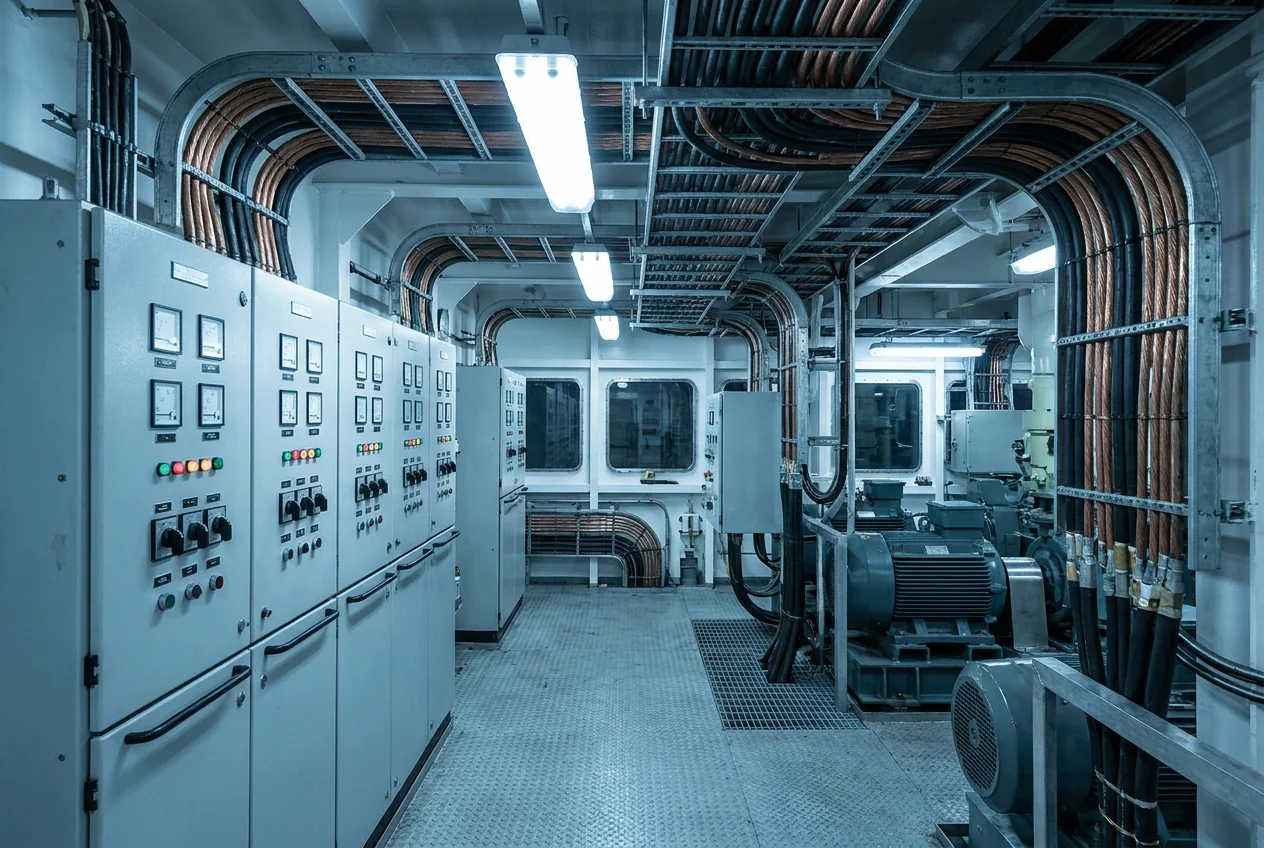
Shipboard Power, Engine Room & Deck Machinery
Distribution, power, lighting and deck-machinery circuits, in flame-retardant low-smoke power cable, with a fire-resistant construction on the emergency circuits.
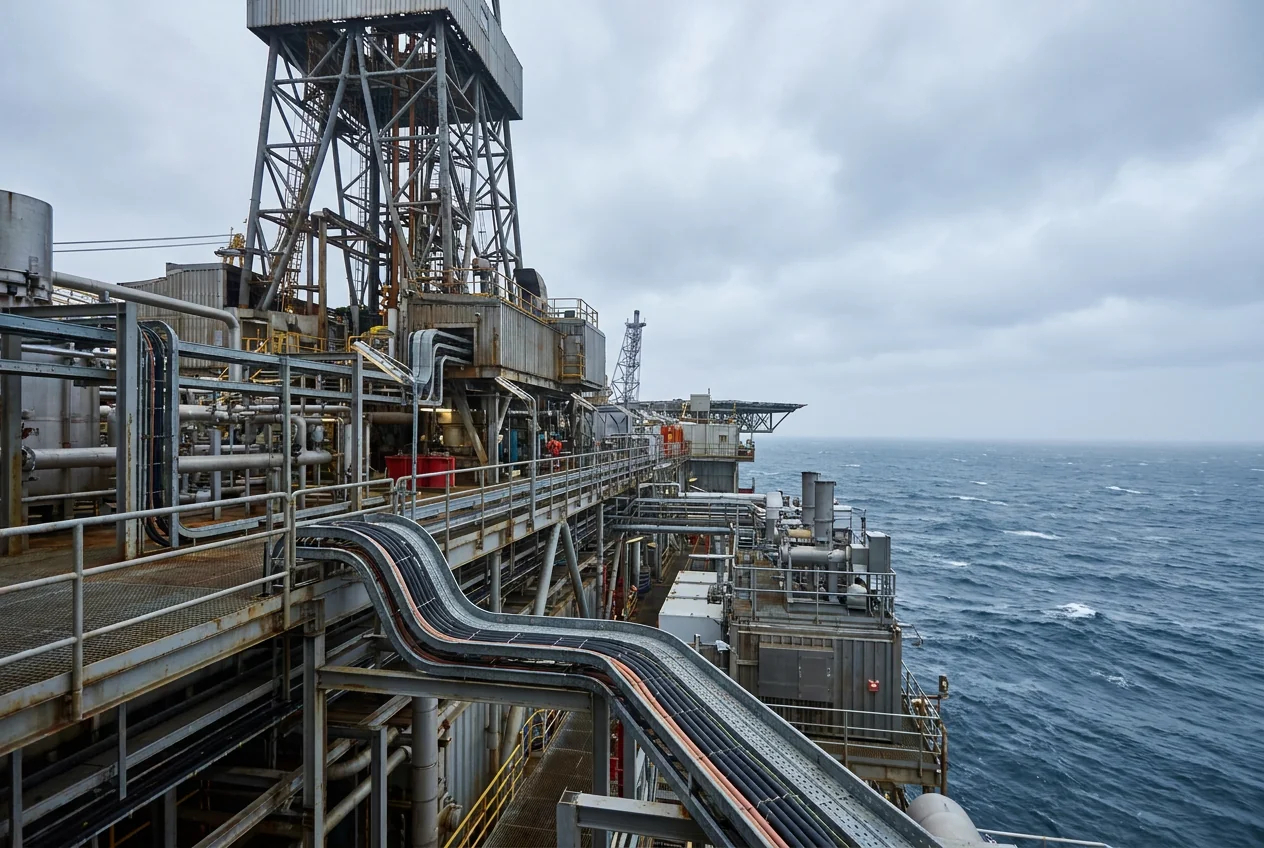
Offshore Platforms & Drilling Rigs
Platform distribution and control in a mud-resistant, oil-resistant build to the NEK 606 offshore types, for the harsh conditions of a rig.
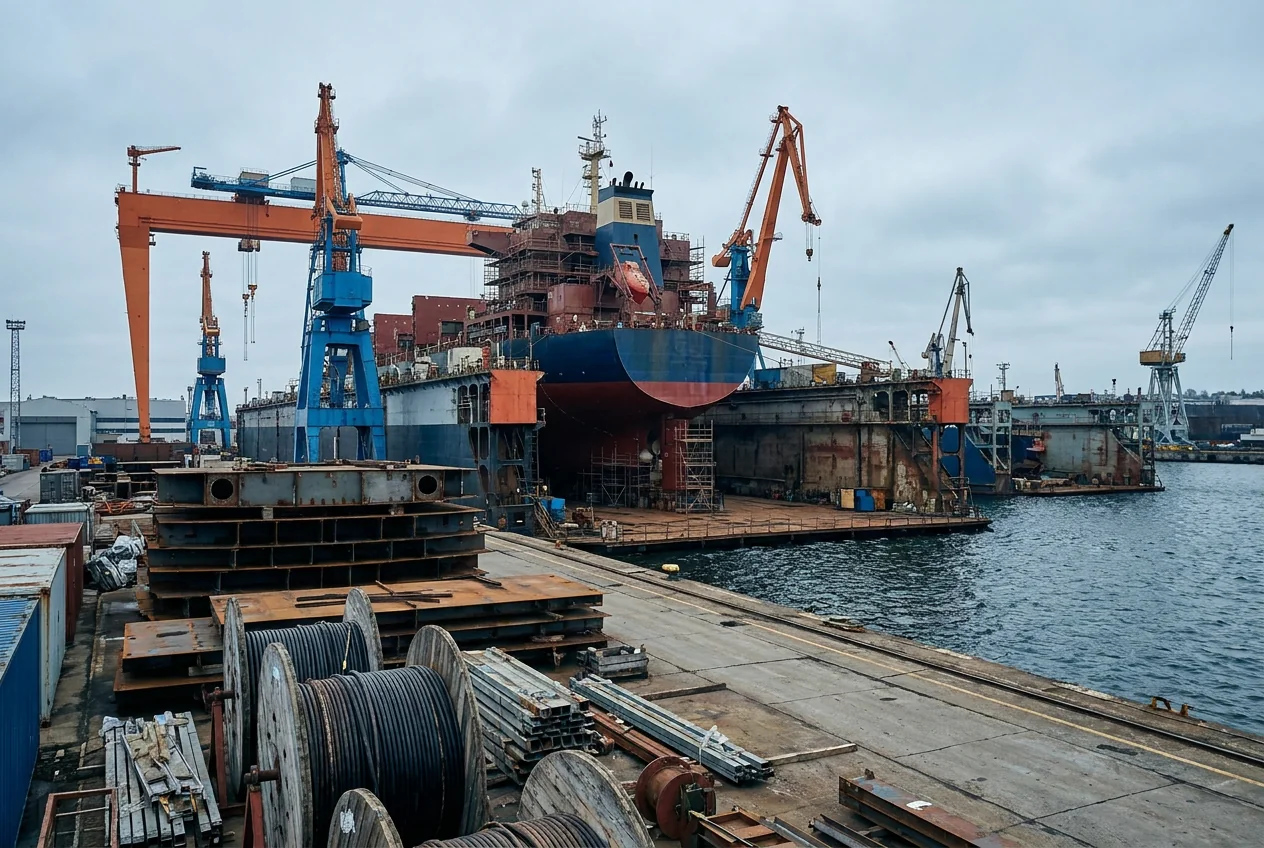
Shipyards, Ports & Marine Equipment OEM
Whole-vessel fit-outs, port cranes and marine-equipment internal wiring, specified by category and to the marine standard the yard builds to.
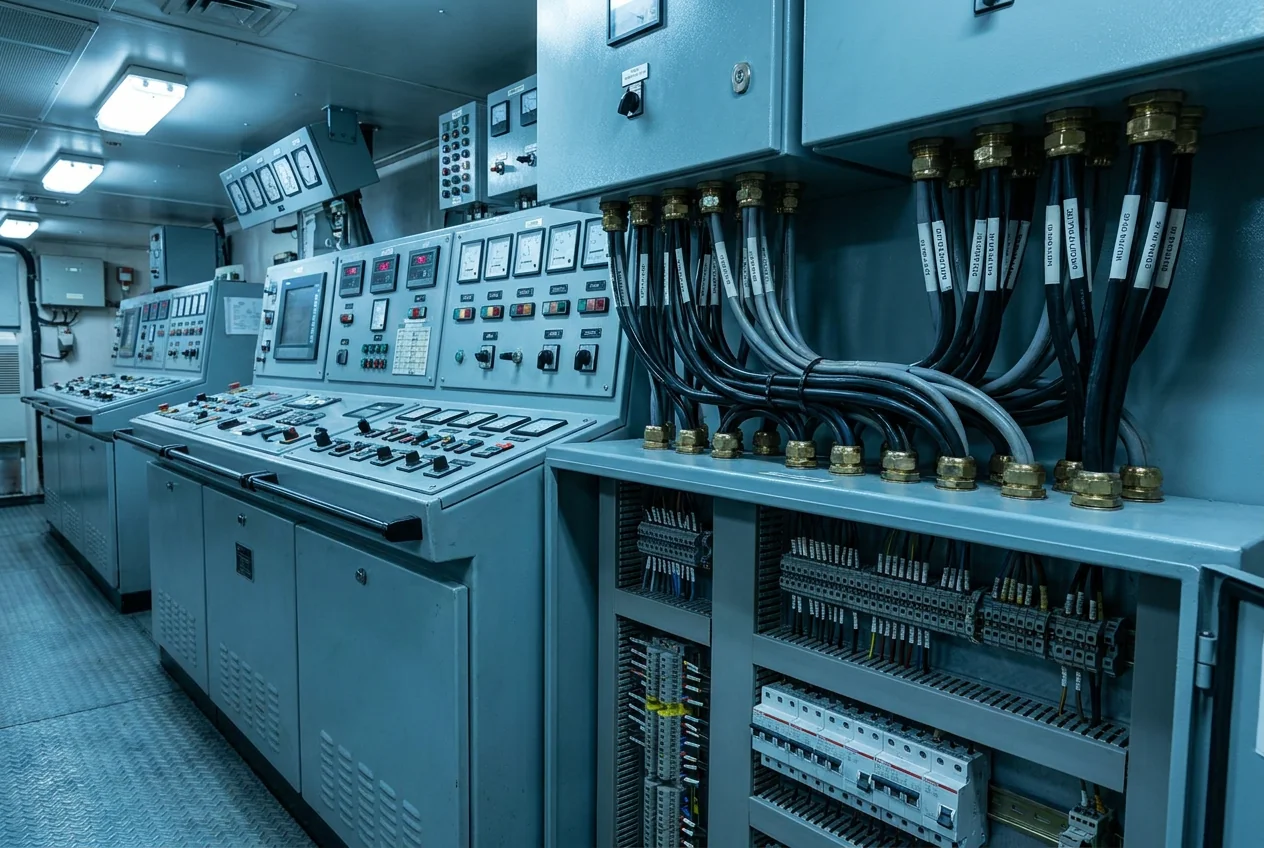
Marine Control & Instrumentation Loops
Equipment-control and measurement-and-monitoring loops in low-smoke halogen-free control and instrumentation cable.
Why Source Marine and Shipboard Cable From Yaxing
With a marine cable the verdict lands at two moments — when the vessel or platform is surveyed for class, and if a fire ever breaks out in a compartment — and both ask the same thing: does the cable that arrived match the marine standard it was ordered to, and are its halogen-free sheath, its fire-resistant construction and its tinned conductor identical from the first metre to the last. That can only be settled where it is made, which is why every length is produced under one roof across thirty years, tested at 100% in our own German-standard laboratory before it ships, and backed by the full certification set we actually hold — CE, UL, TÜV, SAA, RoHS, IEC and ISO 9001, with third-party reports on request, from a 100,000㎡, ten-line plant. It is the same consistency that has kept Yaxing on as a long-term State Grid supplier.
See the full factory, quality system and certification record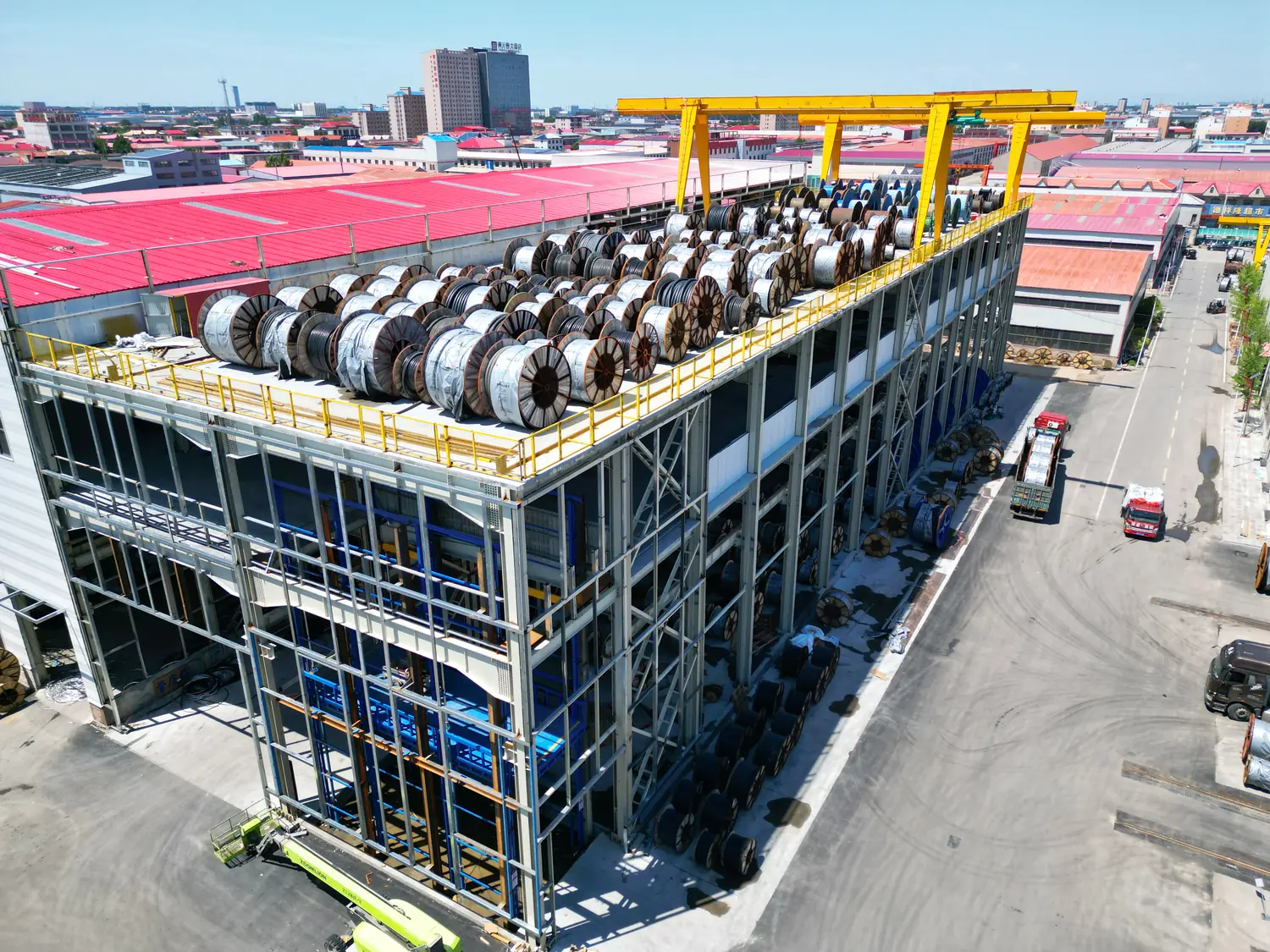 Ten automated lines · 100,000 m² base
OEM and Custom Marine and Shipboard Cable
What a shipyard hands us is usually a circuit schedule and a marine standard to satisfy. So a custom marine cable is specified from the category and the rules it must meet — power, control or instrumentation, to IEC 60092, IEEE 1580 or NEK 606 — and the fire class, sheath, conductor and voltage are all built to match that starting point. The list below is what you can set.
- Category & marine standardPower, control or instrumentation, built to meet IEC 60092, IEEE 1580 or the NEK 606 offshore types.
- Fire classFlame-retardant, low-smoke halogen-free, and a fire-resistant (IEC 60331) construction on the circuits that must stay live.
- Sheath & offshore buildLSZH / HFFR / SHF2 halogen-free compounds, with a mud-resistant, oil-resistant sheath for platform and rig runs.
- Conductor & tinningTinned copper, core count and cross-section to the circuit and the load, to IEC 60228.
- Voltage & cores150/250 V to 0.6/1 kV, single- or multi-core to the circuit.
- Marking, drum & labelMetre marking, type and private-label print for identification during fit-out, in cut lengths on drums, OEM / ODM.
Marine Cable MOQ From 500 Metres, 15 to 30 Day Lead Time
The wiring for a single vessel or platform usually spans several categories and fire classes at once — a run of fire-resistant power cable for the emergency circuits, low-smoke control cable for the deck machinery, screened instrumentation for the monitoring loops. Every marine part number begins at the same 500-metre entry and is booked into a scheduled build window, so a whole-vessel fit-out and a small refit run both land on the date the yard is ready to wire them.
Specify
Category, fire class, marine standard, voltage, core count and quantity.
Confirm
Engineers verify the construction and the build slot.
Produce & test
Booked build window, 100% factory testing.
Dispatch
Reeled and shipped, customs handled together.
Request a Marine Cable Quote
Send your category (power, control or instrumentation), fire class, the marine standard or class the vessel is built to, voltage, core count, whether it is an offshore mud-resistant run, and quantity. Our engineers reply within 4 hours and return a full quote with datasheets within 24.
- Built to meet IEC 60092 / IEEE 1580 / NEK 606 · IEC 60332 / 61034 / 60754 / 60331
- Tinned copper · EPR / XLPE · LSZH / HFFR / SHF2 · 150/250 V – 0.6/1 kV
- MOQ from 500 m · 15–30 day lead time · 100% factory tested
- Reply within 4h · full quote & datasheets in 24h
Prefer to talk first? Email [email protected] or WhatsApp +86 188 7140 0481.