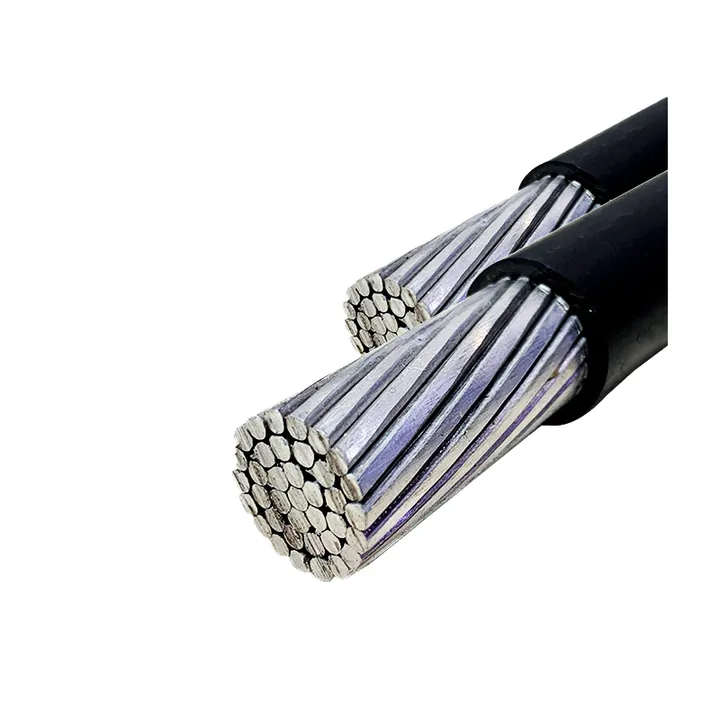
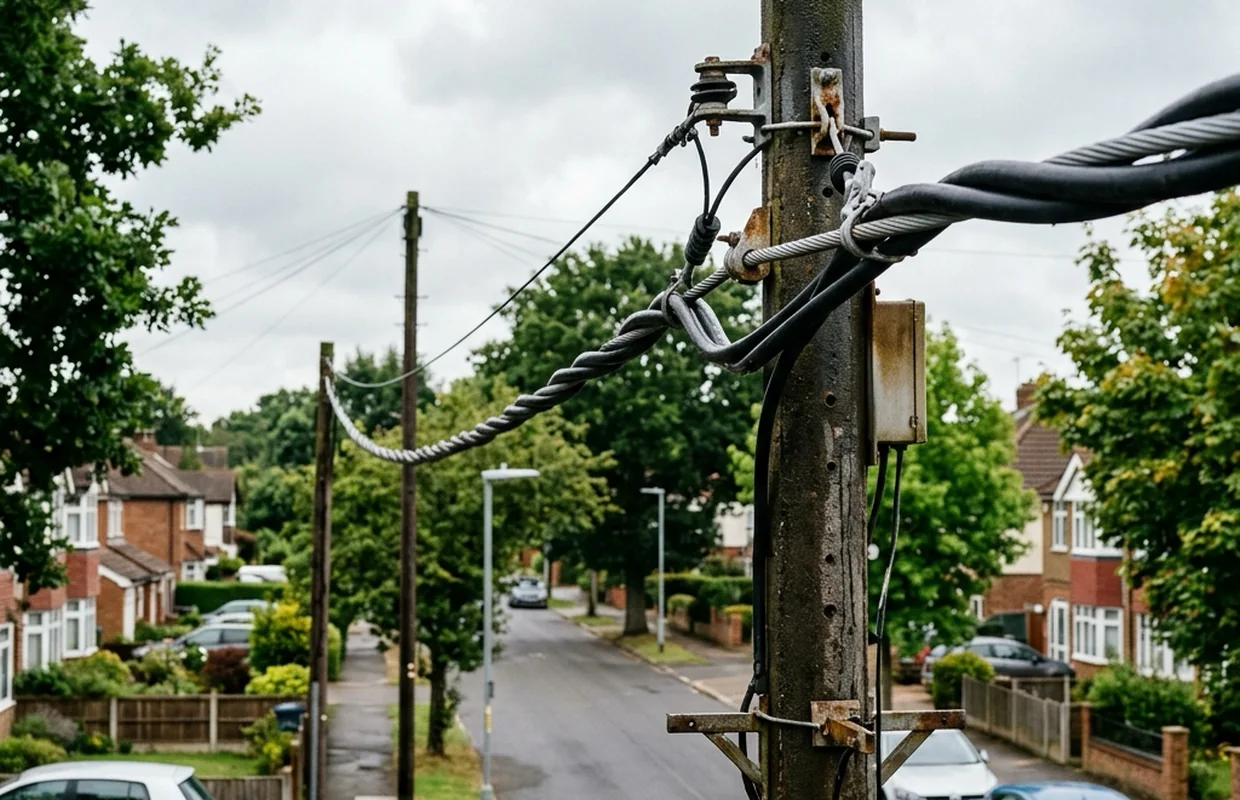
Overhead LV distribution feeders
The main low-voltage run from pole to pole across a distribution area.
Insulated phase cores laid up on a load-bearing messenger — strung pole-to-pole to carry current across the span while the messenger holds the wind, ice and tension, and a UV-stabilized XLPE jacket rides the weather for decades.
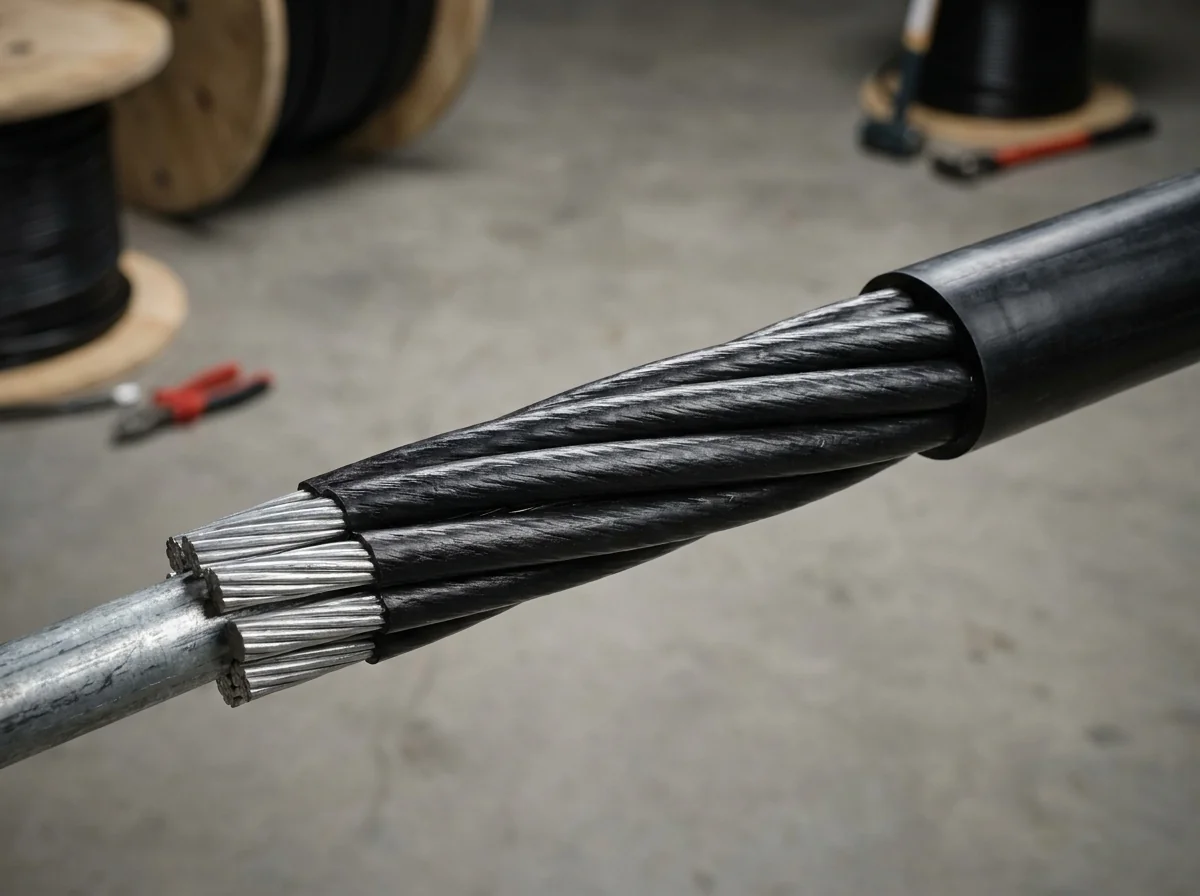 Insulated phase cores laid up on a messenger
An ABC cable is not one conductor but a bundle, and the way that bundle is put together is what makes it an aerial cable. This section is about what is inside the bundle and how the parts divide the work; how it then holds a span and rides the weather is the mechanism explained further down.
The point of the architecture is a division of labour — the messenger is the member that takes the mechanical load of the span, and the insulated phase cores are there to carry current. One part holds the weight; the others conduct. That single structural fact is what separates an aerial bundled cable from a buried, armored power cable, and everything below follows from it.
Pick the row that matches the network you are building and the standard your market clears against. Every configuration here is built to a recognised aerial-cable standard, not a private specification.
MV covered conductor: the same aerial approach extends to common medium-voltage distribution levels — such as 11, 22 and 33kV networks — where covered rather than bare conductors are wanted through trees and tight corridors. Tell us your network voltage and market and we confirm the exact covered-conductor construction.
Conductor & messenger: phase conductors are hard-drawn aluminium (AAC) stranded to IEC 60228; the messenger is a bare AAAC or ACSR strand, or the insulated neutral run as a self-supporting carrier — so the bundle can be strung with or without a separate support wire.
Selection help: send the voltage class, the phase / neutral / lighting core count, the phase cross-section, the messenger type and your market standard, and our engineers confirm the full construction and designation for your tender.
An overhead line has to do two things a buried cable never does: hold itself up across the gap between two poles, and take the sun, rain and temperature swings out in the open for the life of the line. Both come down to mechanism, not a marketing number.
The messenger is the structural member of the bundle, and it alone takes the mechanical tension of the span. The wind pushing sideways on the run, ice building on the conductors, and the dead weight sagging between poles all feed into the messenger — a bare AAAC or ACSR strand, or the self-supporting neutral. The insulated phase cores are laid up around it and carry current only; they are not asked to pull their own weight across the gap. That division of labour is what lets an ABC bundle hang as its own catenary from pole to pole, without a separate catenary wire and without a cross-arm and insulator for every phase. Where a bare open-wire line needs the structure to carry each conductor, the aerial bundle carries itself.
The insulation is UV-stabilized XLPE loaded with carbon black — the carbon black is what shields the polymer from the sun, so a run clamped up on poles does not chalk, go brittle and crack the way an unstabilized jacket does after a few seasons in full exposure. The cross-linked structure resists electrical tracking, the slow surface erosion that leakage current causes on a weathered outdoor line. And because every phase is individually insulated and the cores are twisted into one tight bundle, a branch blown across the line, a bird or animal bridging two conductors, or someone illegally tapping the run no longer creates a phase-to-phase short the way it does on bare open wire — fewer tree faults, fewer phase-to-phase shorts, fewer contact incidents across the rated voltage class.
Map the line you are building to the bundle it needs, so the voltage class, the messenger and the standard match the network rather than a generic datasheet.
The main low-voltage run from pole to pole across a distribution area.
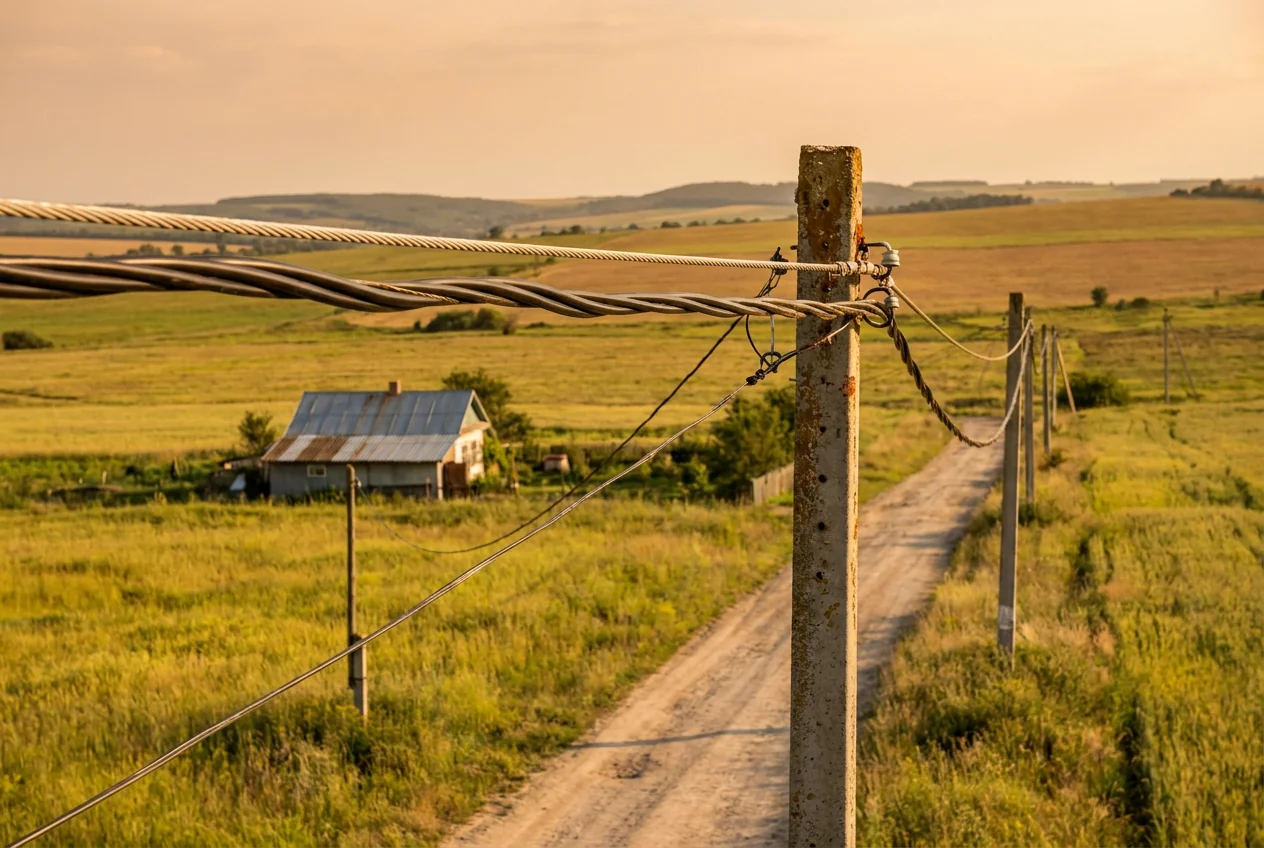
Narrow-corridor lines reaching homes and small settlements, where a self-supporting neutral keeps the pole hardware and cost down.
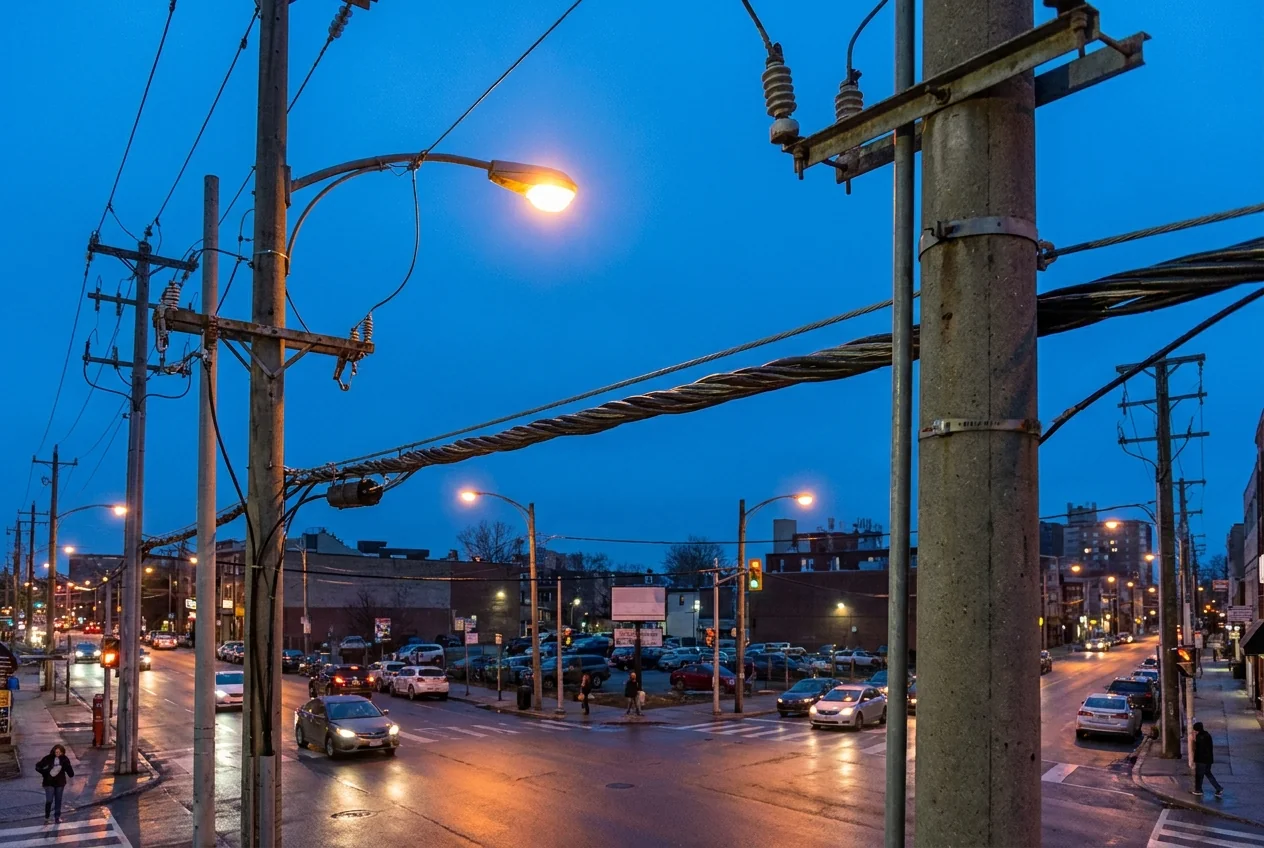
A distribution feeder that carries a dedicated street-lighting core in the same bundle, so one aerial run powers both the network and the lamps.
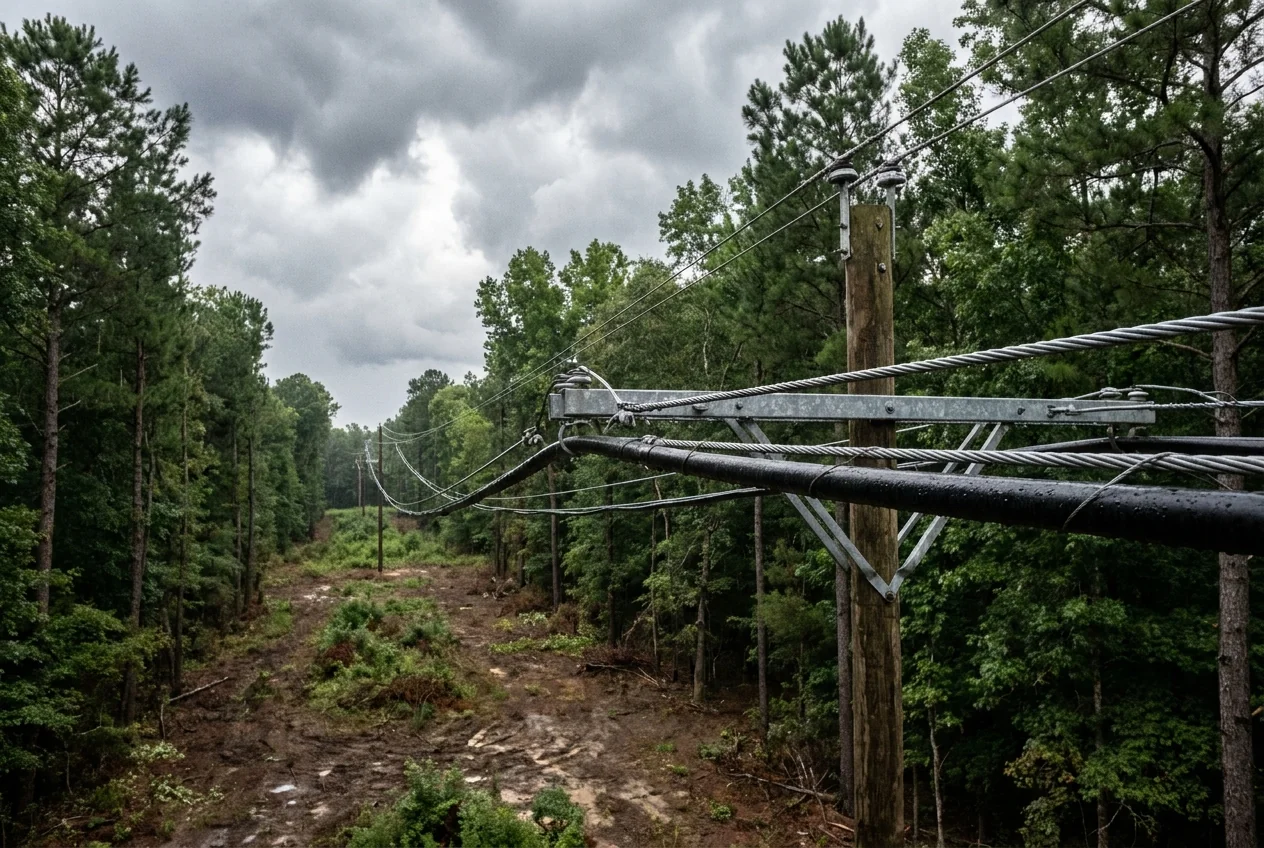
Medium-voltage runs through trees, salt air and storm-prone right-of-way, where a covered conductor cuts branch and contact faults that bare wire cannot.
An aerial line goes up on the poles once and is expected to hang there for decades — you do not get to re-splice a bad reel once it is strung high on the pole line. So what actually matters in an ABC supplier is that every drum is built to the same numbers: the aluminium drawn, the messenger stranded and the UV-XLPE extruded to the same wall on our own lines, reel after reel. That end-to-end control is why a self-owned source factory — a long-term State Grid supplier across 30 years, certified to CE, UL, TÜV, SAA, RoHS, IEC and ISO 9001, running an in-house German-standard laboratory that tests 100% of production before dispatch — can hold that batch consistency across a full network order, from the 100,000 m², ten-line plant.
See the full factory, quality system and certification record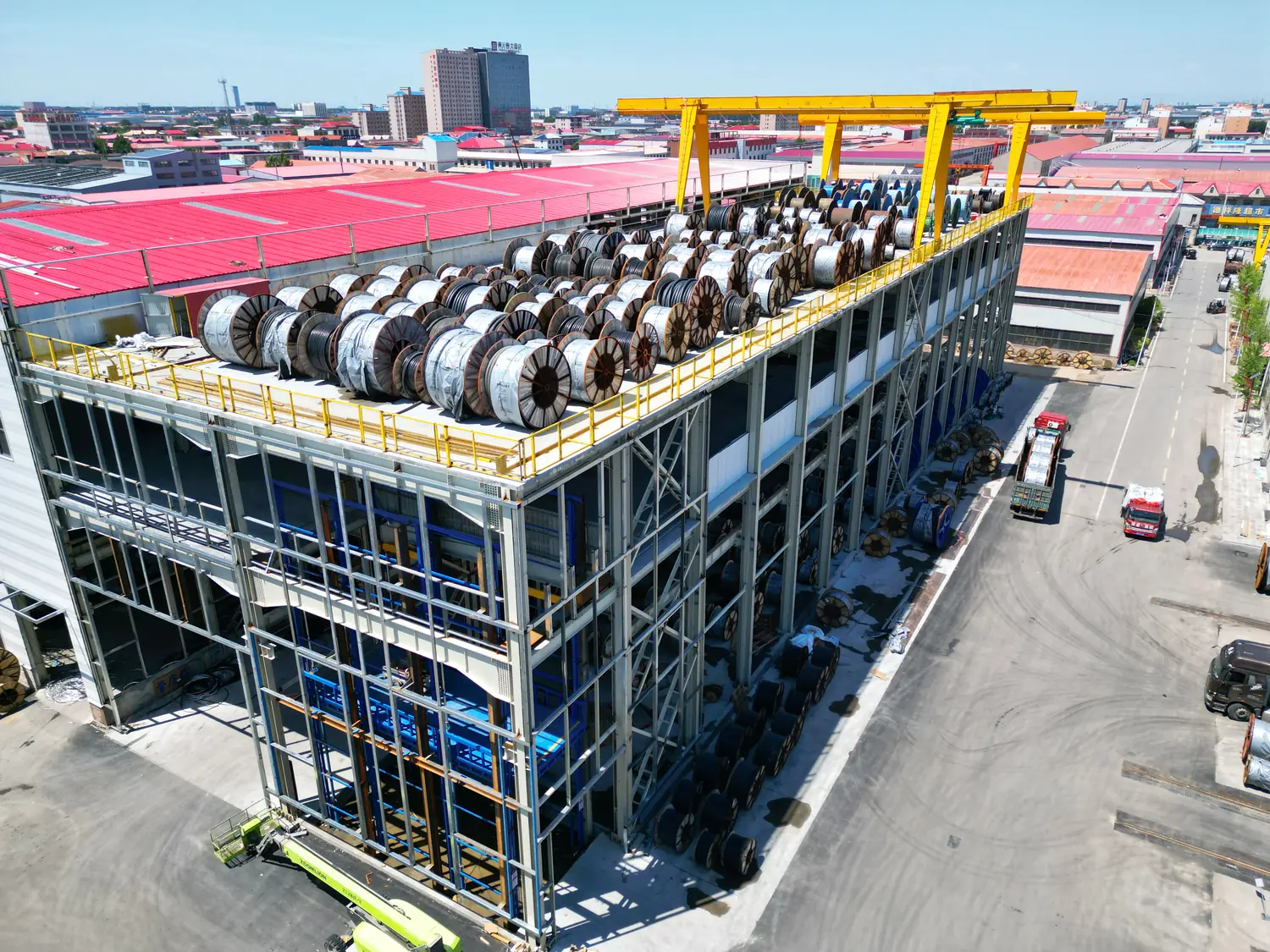 Ten automated lines · 100,000 m² base
Every distribution utility writes its aerial network to its own spec sheet — a phase cross-section for the feeder current, a messenger rated to the span it has to cross, and the regional standard the grid is inspected against, from IEC and BS through NF C, AS/NZS and ICEA. The whole bundle is stranded and configured to those numbers, then sequentially metre-marked and printed under your label.
A distribution network gets built span by span — a trial section on one feeder first, then the full rural or street-lighting rollout once the build is proven. The order threshold is set low enough to cover that first section, and every run — one pilot reel or a network's worth of drums to several market standards — is booked into a scheduled production window, so repeat framework reels land when the line crew is actually up on the poles.
Voltage class, messenger, core count and quantity.
Engineers verify construction and market standard.
100% factory testing on every batch.
Logistics and customs handled together.
Send your network voltage class, messenger type, core configuration, phase cross-section and quantity. Our engineers reply within 4 hours and return a full quote with datasheets within 24.
Prefer to talk first? Email [email protected] or WhatsApp +86 188 7140 0481.